New Bellows
for the Marvellous Designed Graflex
3 1/2 x 5 1/4 Compact Graflex
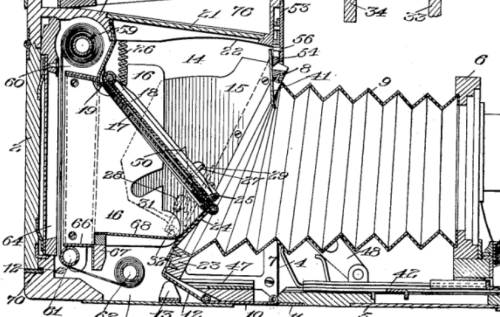
The Graflex Compct Camera patent drawing
Restoring the
Graflex Compact Graflex 3x5 camera.
demands skills and experience
here are some handy tips to help you with the first steps.
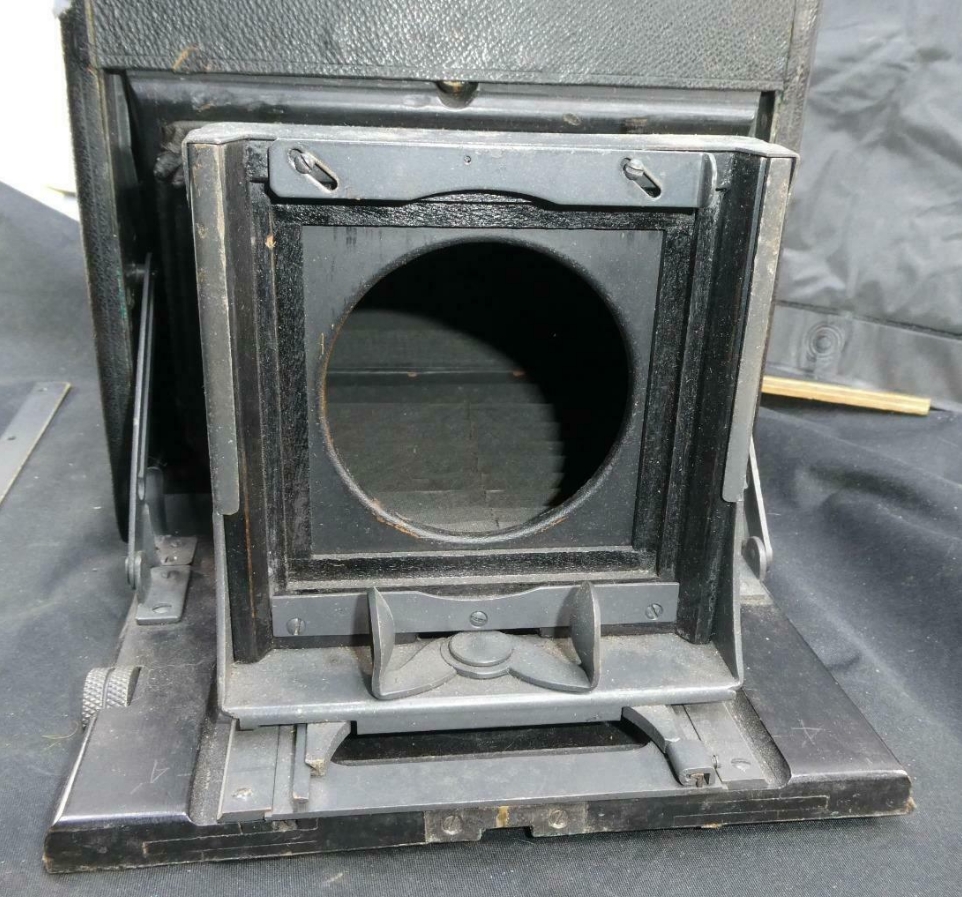
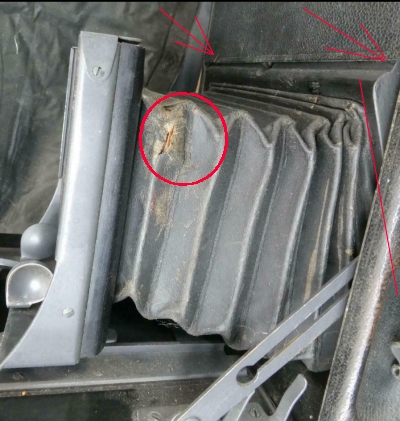
by pulling out the lens board as far as possible the bellows
may show its imperfections.
Before working on the camera, remove the focussing hood and
ground glass.
Cover the mirror to protect its silver sensitive surface
coating.
Never rub such a mirror. Cleaning only with a nylon static
dust cleaner.
To start disassembling separate the bellows including inside front plate from the back of the lens board.
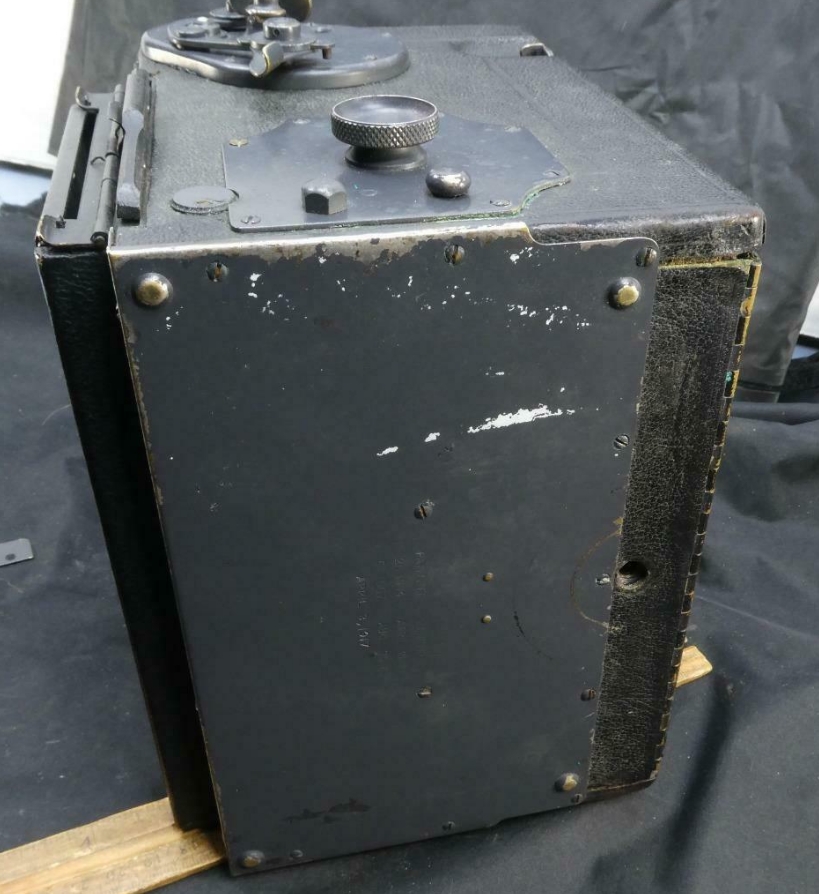
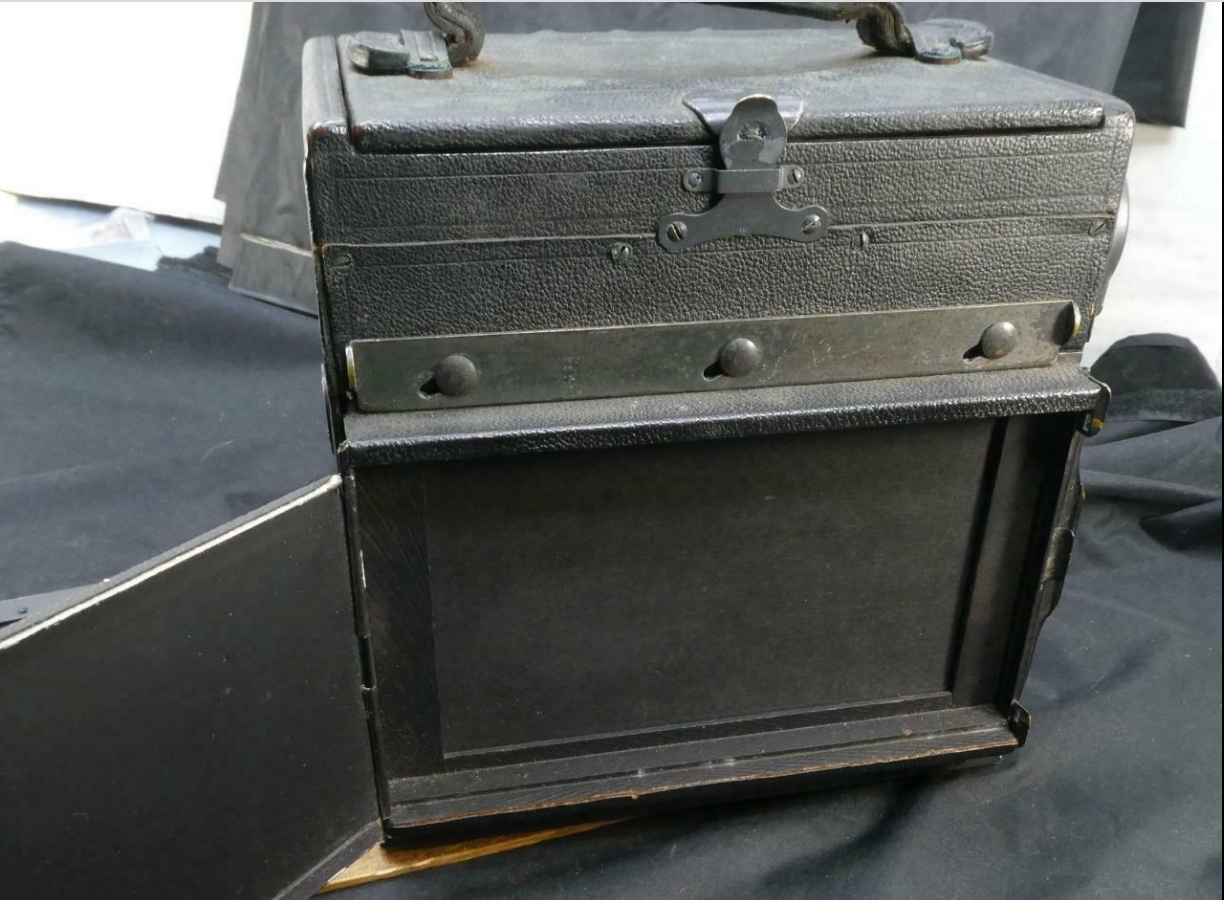
Photo on the right: Backside with film holder
closed with dark slide to protect the focal plane shutter
while working on the camera.
Don't remove the film holder to avoid touching the focal plane
shutter or use a cardboard protector shield.
Make sure the mirror is in horizontal position.
Start with the inspection of the camera before
starting any disassembling..
Note the under spring tension mounted gunmetall grey plate
cover with the Patent Numbers. Do not remove this plate if not
strickly necessary.
Check winding and the working of the focal plane
shutter. If it stuck do not force and leave it as it is.
Unlike other Graflex cameras the Compact has been equipped
with an extra safety blind.
Remove old worn Bellows
The bellows are very difficult to remove out
of the camera. In fact you would have to disemble almost the
whole camera including the mirror and all its
mechanisme whoich is connected to the winding mechanism of the
focal plane rollers.
Start the work to remove the old worn bellows.
To remove the lens including the lens board unscrew the top
plate of the lens standard and slide the lens board including
the lens upwards out of the standard.
Store the lens on a save place.
Remove the infinity screws on front of the track and pull out
the lens standard. The outer board is coupled with the board
inside the bellows.
Separate them by carefully bending the little hooks holding
the inner lens board. The inner lens board can be taken off
now.
If you bend the hooks too much they might brake off, so you
better bend just enough to be able to get the outer board
separated.
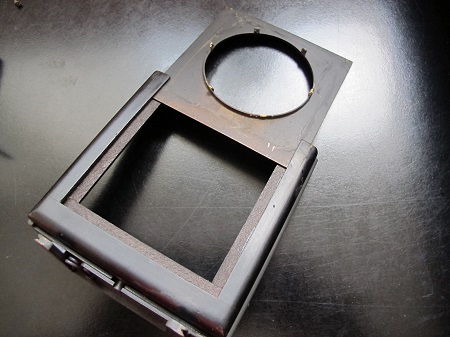
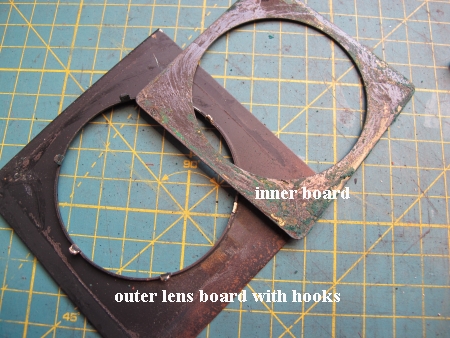
Bellows with frame
can be taken out now.
After
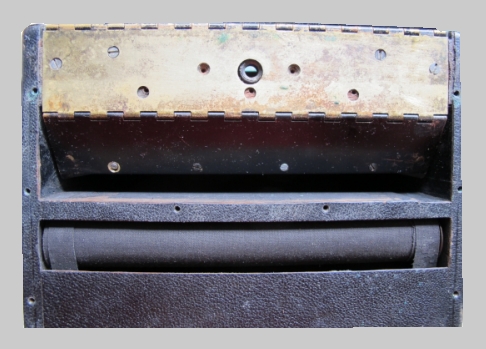
removing the bottom plate the brass hinged plate becomes
visible. The black finished hinged part of it holds the
bellows frame inside the mirror house in position.
This is done by a build in leaf spring. When working on the
camera make sure the mirror is in rest position to avoid
sudden release.
Unscrew both hinged plates but make notes take photos and
keep the screws separated.
Photo left shows the partly dissembled camera bottom.
After completely taken off the bottom assembly, you'll be
able to pull out the bellows frame including the worn
bellows with the inner part of the front lens board.
While disassembling, please pay attention. Store the screws
separately and make notes and take photos of
their original location. Each part of this assembly has its
own size of screws.
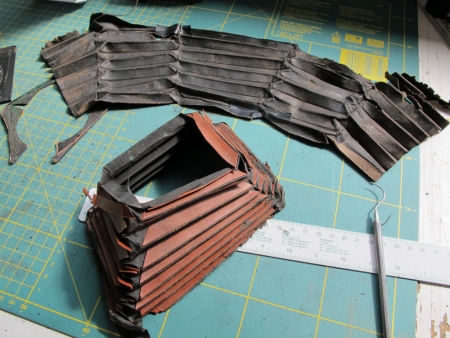
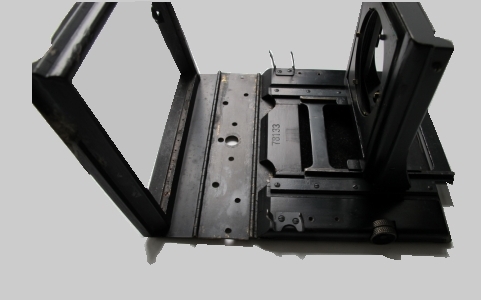
Above picture shows the slant position of the
bellows frame positioned in front of the exposure chamber.
It also shows the hinged drop bed with track and front lens
plate taken apart from the camera.
To isolate this part of the camera the front lens board should
be taken off and pulled through the slit in the bottom of the
camera housing.
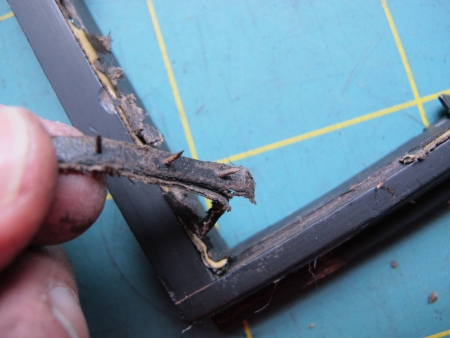
The bellows inside the camera house is fastened to a wooden
frame by nails and you have to be very careful getting the
little nails out without breaking the frame.
Be aware that you won't find those very tiny nails in your
local hardware shop nor in their surrounding world, so you'd
better try to get them out of the frame without spoiling them.
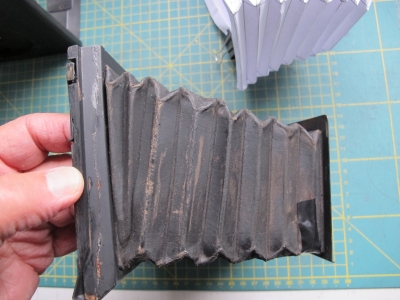
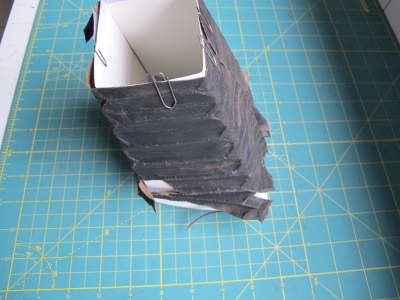
The separated bellows is very useful for taking the
measurement to create the new bellows. Take length measurement
of the four folds and
length and width of the frame and inner lens board. Make a
dummy out of thin cardboard for testing purposes.
Making New Bellows.
The slant shaped bellows are not easy to
design and manufacture.
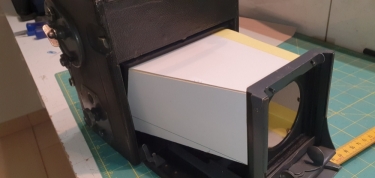
First make a paper or cardboard dummy to check if the old
bellows fits around it and if the slant end fits precisely
into the bellows frame.
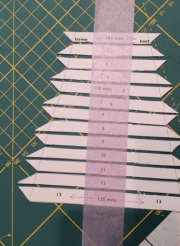
Use Photo Shop® or Coral Draw® to design the bellows folds.
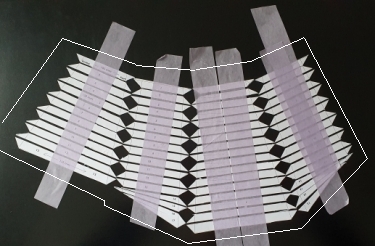
Print them on normal print paper and glue them to the dummy
cardboard design. (right picture below)
9 mm for each stiffener, 2 mm for the space between them and
so on.
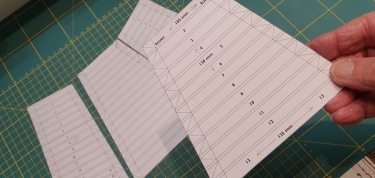
cut out the space between the stiffeners and make sure to use
removable tape to consolidate their position.
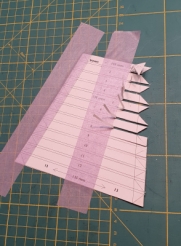
If the drawings are ready cut two pieces of
fabric out of the BK5 Black Nylon fabric.
One piece for the outside and one for the inside cover. Take
at least one inch more than your pattern.
Only use spray glue and and glue the stiffeners to the
BK5-Black Nylon Blackout fabric.
You should end up with a round closed model which needs to be
formed with your fingers to the bellows.
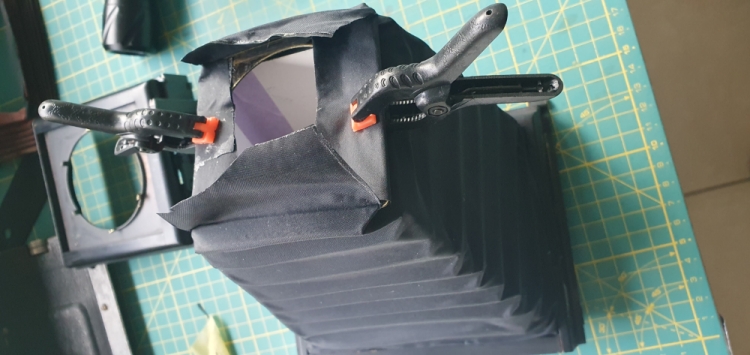
Mount the inner lens board into the front of
the bellows.
I used the test cardboard dummy to hold the new bellows strait
while working on it.
Mount the back of the bellows to the frame using the original
tiny nails.
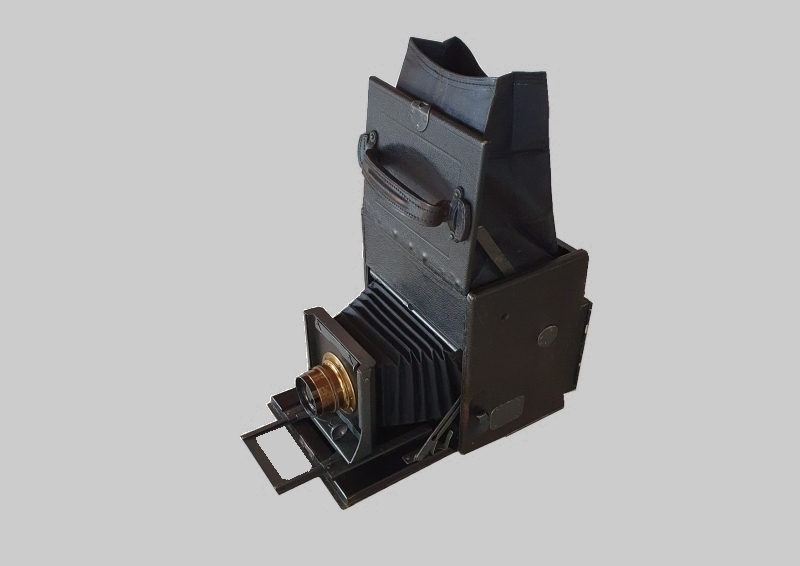
I'm really happy to
present the overhauled 1917 Compact Graflex in perfect
working condition equipped with new bellows.
Camera Photos © Jo
Lommen